Mid-Year Hiring Check: Is Your Team Set Up for the Rest of 2026?

As we move into the second half of 2026, many Australian business owners are taking a closer look at performance, profitability and future growth plans.
For businesses in trades, construction, manufacturing environments, hospitality and commercial cleaning, the middle of the year is often where cracks start to show. Workloads shift, key staff leave, projects ramp up, and businesses realise they're either understaffed, overstaffed or relying too heavily on a few key people.
The question is simple:
Is your team actually set up for the next six months?
The Employment Market Is … Shifting
For the last few years, Australian businesses have faced ongoing labour shortages and fierce competition for skilled workers. While those challenges haven't disappeared, the market is becoming more complex.
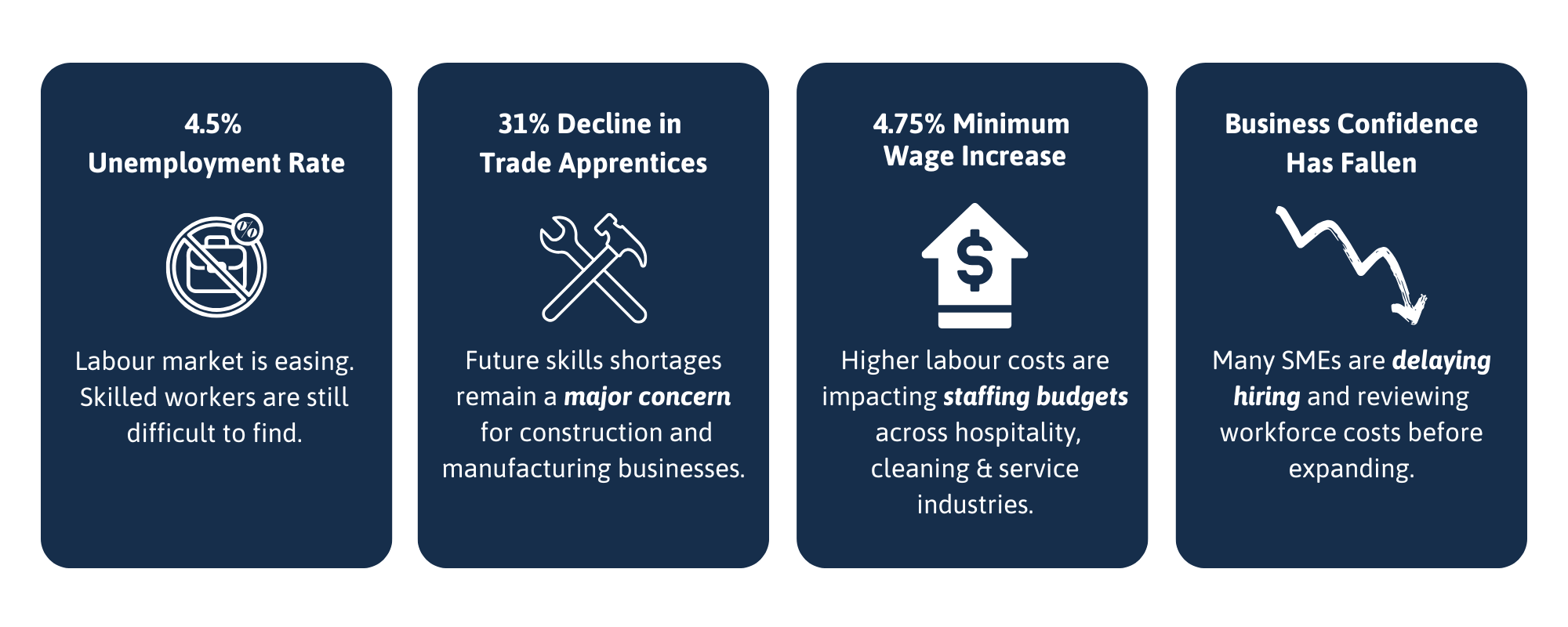
According to the Australian Bureau of Statistics, Australia's unemployment rate increased to 4.5% in April 2026, up from 4.3% the previous month. While still relatively low by historical standards, it suggests the labour market is beginning to soften. At the same time, many businesses are reporting lower confidence levels due to rising operating costs, ongoing inflation pressures and economic uncertainty. In New South Wales, small business confidence recently fell to its lowest level since surveys began in 2020. For employers, this creates an unusual situation.
There may be more candidates actively looking for work, but finding reliable, experienced and industry specific talent still remains difficult.
The Trades and Construction Challenge Isn't Going Away
One of the biggest concerns facing Australian businesses is the ongoing shortage of skilled tradespeople. Recent industry reporting shows trade apprenticeship numbers have fallen by 31% since 2021, with manufacturing trades down 21% and construction apprenticeships also declining.
This has significant implications for:
Residential builders
Commercial construction companies
Manufacturing businesses
Facilities management providers
Maintenance contractors
Many businesses are already feeling the impact through longer hiring timeframes, higher wage expectations and increased competition for experienced workers. If your business relies on qualified tradespeople, supervisors or maintenance staff, waiting until someone resigns before recruiting is becoming a costly strategy.
Are You Carrying Hidden Hiring Risks?
A mid-year review isn't just about asking whether you need more staff. It's about identifying the risks already sitting inside your business.
Ask yourself:
Do you have any employees showing signs of burnout?
Is one person carrying critical knowledge that nobody else has?
Have your best performers received any recognition this year?
Are you relying on overtime to get work completed?
Do you know what salaries competitors are currently offering?
Many hiring problems actually start months before a vacancy exists.
A resignation often feels sudden, but in reality, warning signs usually appear well before the employee hands in their notice.
Service based Businesses Face a Different Challenge
For hospitality operators and commercial cleaning businesses (as the example), staffing issues often look different.
The challenge isn't always finding applicants. The challenge is finding people who consistently show up, communicate well and genuinely want long-term employment. With rising living costs continuing to impact workers, many employees are seeking higher pay, more flexibility or secondary income sources. This means retention should be receiving just as much attention as recruitment. Businesses that communicate clearly, provide stable hours and create positive workplace cultures are often retaining staff more successfully than businesses simply offering slightly higher wages.
Fair Work increases Australia’s Minimum Wage
A major development likely to affect hiring decisions in 2026 is the recent Fair Work Commission decision to increase Australia's minimum wage by 4.75%, with some of the lowest-paid workers receiving increases of up to 6%. Nearly three million workers will be affected.
For industries such as:
Hospitality
Commercial cleaning
Facilities management
Retail
Labour-intensive service businesses
This places additional pressure on payroll budgets during the second half of the year. While higher wages can support employee retention and attract candidates, many small businesses will need to carefully review pricing, workforce planning and labour costs moving forward.
What Should Businesses Focus On Before 2027?
The strongest businesses heading into 2027 won't necessarily be the ones hiring the most people. They'll be the businesses that understand their workforce, plan ahead and make proactive decisions.
Consider reviewing:
Workforce gaps and future hiring needs
Employee retention risks
Salary competitiveness
Succession planning
Training and development opportunities
Recruitment processes and hiring timelines
The businesses that wait until they're desperate usually pay more, hire faster and make poorer hiring decisions. The businesses that plan now tend to have more options later. As we enter the second half of 2026, now is the ideal time to take an honest look at your team and ask whether your current workforce is capable of supporting your business goals over the next six to twelve months.
It’s not just about filling positions. It's about building stability, protecting productivity and setting your business up for sustainable growth.

Have a hiring challenge? Take advantage of our Free 15-Minute Hiring Health Check calls. Free for all Australian Small Business.