The Hidden Cost of a Bad Hire
(and How Smart Businesses Avoid It)

Hiring the wrong person is one of the most expensive mistakes a business can make.
Most business owners think about the cost of a bad hire in terms of only salary. But the reality is far more significant. When the wrong person joins your team, the financial impact spreads like a rash across productivity, morale, customer experience and most importantly … your time.
In uncertain economic conditions (like the ones we are currently facing) these mistakes can really add up.
With rising operating expenses being blown out of the park for most industries, cautious spending and tight budgets, every hiring decision matters more than ever.
So have you ever taken a look at what a bad hire actually costs you?
The True Cost Goes Far Beyond Salary
When someone isn’t the right fit for a role, the damage appears gradually. It’s like a slow burn that whispers before it screams at you.
At first, it might look like a training issue. Then small mistakes begin to show. Deadlines slip. Other staff start picking up the slack … and often what happens when this goes on for too long is you become at risk of losing your key staff simply because they have had enough.
Eventually the problem becomes clear: the person simply isn’t right for the role.
By that stage, the real cost may already include:
Recruitment advertising and hiring costs
Training and onboarding time
Lost productivity
Management time spent supervising or correcting work
Reduced team morale
Customer service issues
The cost of replacing the employee
Your sanity when trying to work out what and why it happened
For small businesses especially, these impacts can add up quickly.
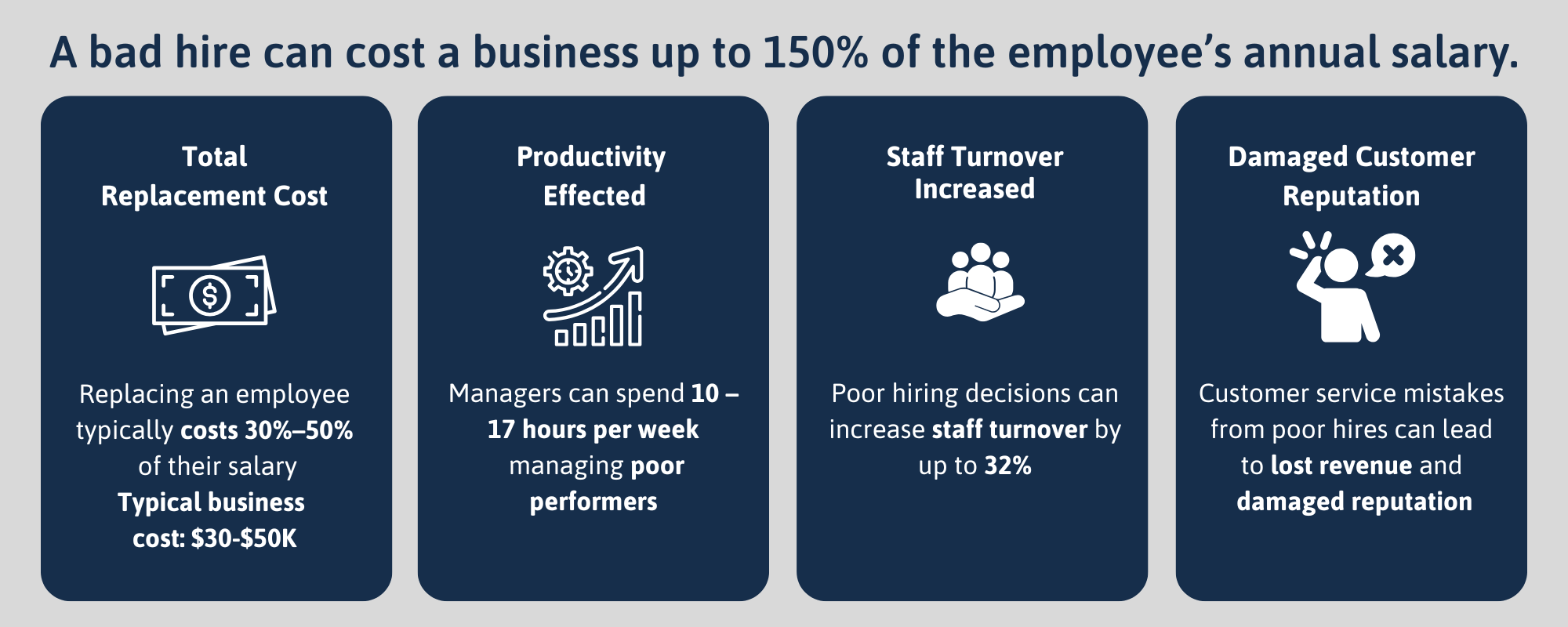
In fact, some studies suggest a bad hire can cost 30% of the employee’s annual salary or more once all factors are considered.
To break this down, for a $100,000 role, that could mean $30,000 + in lost productivity and replacement costs.
If that person lasted 3 months in the role, that bad hire cost you $55,000
If that person lasted 6 months in the role, that bad hire cost you $80,000
And … if they actually lasted 12 months in the role, that bad hire cost you $130,000
Ouch.
Why Bad Hires Happen More in Uncertain Markets
Economic uncertainty creates pressure on business owners to make quick decisions. It doesn’t mean business owners necessarily make bad decisions. It means, their quick decisions can become a bad (and costly) one. When workloads increase or staff leave unexpectedly, the temptation is to fill the role quickly.
And we’ve heard it before “We just NEED someone!” But rushing recruitment often leads to mistakes.
Common causes of poor hiring decisions include:
Hiring too quickly due to workload pressure
Unclear job descriptions
Overvaluing experience without assessing attitude or cultural fit
Limited candidate pools
Skipping proper reference checks
Hiring someone “good enough” rather than the right person
In challenging markets, the fear of not having anyone in the role can push businesses into decisions they later regret.
The Ripple Effect on Your Team (and You)
One bad hire rarely affects just one role. Think about it.
When someone underperforms, other staff often need to step in to support them. This can lead to frustration and burnout among your best team members.
Over time, it can even cause good employees to leave. For small businesses with tight teams, this ripple effect can be especially damaging. A single poor hire can disrupt team culture, productivity and customer experience.
How Smart Businesses Avoid Costly Hiring Mistakes
Businesses that consistently build strong teams usually follow a few simple principles.
1. They Define the Role Clearly
Before advertising a position, successful businesses take time to clarify:
What outcomes the role is responsible for
What skills are essential vs nice-to-have
What type of personality will thrive in the team
A clearly defined role attracts better candidates.
2. They Look Beyond the Resume
Experience matters, but attitude and problem solving ability often matter more. These types of people are (generally) more resilient, can be trained across multiple tasks and are good operators.
Smart hiring focuses on:
Work ethic
Communication skills
Cultural / team fit
Ability to learn and adapt
These traits often predict long term success better than a list of past job titles.
3. They Take Time to Interview Properly
Structured interviews can reveal far more about a candidate than casual conversations.
Good interview questions explore:
Real examples of past challenges
Decision-making processes
How candidates handle pressure or mistakes
This helps employers understand how someone actually performs in the workplace and how they will perform in THEIR workplace.
4. They Partner With Recruitment Specialists … When Needed
For many small businesses, hiring is not something they do every week.
Working with a recruitment partner can help businesses:
Access a wider candidate network
Save time screening applicants
Reduce hiring risks
Focus on running the business
The goal isn’t just filling a vacancy. It’s finding someone who genuinely contributes to growth.
It can also save you a lot of time (and money).

In Uncertain Markets, Smart Hiring Matters More Than Ever. Economic conditions may change, but one principle remains constant. Great businesses are built by great people.
When hiring decisions are made carefully and strategically, the benefits extend far beyond filling a role. They create stronger teams, better customer experiences and more resilient businesses.
You’ll also have better satisfaction (and probably maintained your sanity) across your entire business … all the way to your customer.